
Gold Standard

Consultation

Activity Requirements - Energy Systems and Efficiency (ESE)

  • Consultation Period 22 Jul 2026 - 21 Aug 2026
  • Submission Deadline Aug 21, 2026 — 16:00 (Europe/Zurich)
  • Scope Activity Climate ActionAffordable and Clean Energy
Activity requirements-Energy-systems-efficiency-Cover

Background

The energy transition is no longer driven by renewable electricity generation alone. Achieving net-zero emissions increasingly depends on integrated energy systems that combine renewable generation, energy storage, grid flexibility, distributed energy resources, energy efficiency, green hydrogen and the accelerated retirement of fossil-fuel assets.  

To reflect this evolution, Gold Standard has updated its Activity Requirements and developed the new G-RESET methodology  to support climate action across the entire energy system rather than through renewable energy generation alone. Through a modular approach, project activities can combine multiple components and apply the requirements relevant to their design, creating a more flexible and comprehensive framework for quantifying and crediting climate impact.  

The ESE Activity Requirements cover renewable energy generation; energy storage and grid flexibility; distributed energy resources; energy efficiency; green hydrogen; and the accelerated retirement of fossil-fuel assets. 
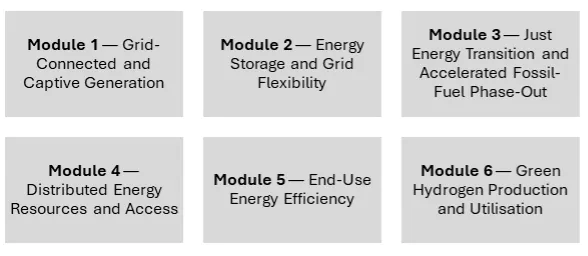
Picture Modules- Activity Requirements ESE

This approach reflects how modern energy systems are being built and decarbonised. It also responds to growing demand for methodologies capable of addressing integrated energy-transition projects rather than individual technologies in isolation.  

These updates are part of the work Gold Standard is doing to align with the Paris Agreement through methodologies consistent with 1.5°C trajectories and increasing national climate ambition. Enhanced additionality requirements and technology safeguards ensure credits are issued only where activities demonstrate regulatory surplus and support real mitigation outcomes. Baseline setting applies Downward Adjustment Factors to reflect increasing climate ambition, while existing technology-specific safeguards continue to apply.  

A new eligibility approach for grid-connected renewable energy generation.

As part of this broader update, Gold Standard is revising the eligibility requirements for grid-connected renewable energy generation.   

Under the original Renewable Energy Activity Requirements v1.4 (Sections 2.1.3), a grid-connected renewable activity was eligible only where it was located in a least-developed country, a small-island developing state or a land-locked developing country, or in a low- or lower-middle-income country where the proposed technology supplied less than five per cent of grid installed capacity.  

Under new ESE Activity Requirements, a grid-connected renewable activity is eligible where it supports mitigation outcomes identified within the conditional, or support-dependent, component of the host Party's Nationally Determined Contribution (NDC).   

The revised eligibility requirement determines which activities may apply for certification. It does not alter the requirements that determine whether an activity is additional or how many emission reductions may be credited.  

The rationale 

Modern energy systems rely on the interaction of multiple technologies. Renewable energy generation increasingly works alongside battery storage, demand response, virtual power plants, distributed energy resources, energy efficiency measures and green hydrogen production. Treating these activities through a single modular framework enables integrated projects to quantify their climate impact more accurately while maintaining consistent integrity requirements across the energy sector.  

The approach responds to growing market demand for methodologies that reflect how energy systems are being built and decarbonised. This is among the first frameworks from a major carbon standard to span the full energy system through a single, modular structure.   

The update to the eligibility scope reflects the evolution and maturity of regulatory frameworks, carbon markets and assessment tools over recent years. We now have better tools, including activity-level additionality, regulatory-surplus analysis, investment analysis against standardised investment benchmarks, and common-practice analysis to determine whether carbon finance is needed to enable an activity.  

That, alongside anchoring eligibility to the host country’s NDC, replaces a generic location and income-based proxy with the country’s own assessment of where international support is needed. This approach also ensures that crediting evolves to account for the host country’s ambition and commitment.   

Assessment of technologies based on individual merit and additionality, rather than applying a unique country-income criterion to generation projects alone, also brings grid-connected renewable generation into line with other energy system activities under Gold Standard.  

Key Features: 

  • One framework for the whole energy system - Reflects how modern energy systems operate, rather than treating technologies in isolation.  
  • Modular architecture - Projects can combine generation, storage, flexibility, efficiency, and hydrogen within a single framework.  
  • Supports integrated energy-transition projects - Enables quantification of climate impact across interconnected technologies.  
  • Paris Agreement aligned - Eligibility, additionality, baselines and crediting evolve alongside increasing national climate ambition.  
  • Consistent integrity requirements - Applies the same additionality, baseline, monitoring and safeguard principles across the energy system.  
  • Future-proofed for emerging technologies - Accommodates technologies that are increasingly critical to decarbonisation but are not well covered by traditional renewable energy methodologies.  

Transition and existing activities:

The change in eligibility will apply prospectively. It will govern activities validated after the entry into force of the Activity Requirements (AR) 202 for Energy Systems and Efficiency (ESE). The change does not reopen, reassess or retroactively affect activities previously assessed under the Renewable Energy Activity Requirements, nor does it affect activities that have already been certified. 

Gold Standard invites feedback from stakeholders

Gold Standard welcomes feedback that helps refine the guidance, evidence expectations and practical application of the revised basis. The following questions indicate where input would be most useful.  

  1. Does the move to a broader energy-systems approach reflect how energy-transition projects are being developed today?   
  2. Does the proposed scope adequately capture the activities needed for energy-system decarbonisation?  
  3. Are the Activity Requirements clear and practical?   
  4. Do the requirements adequately support integrated projects?   
  5. Are there practical implementation challenges, unintended consequences or market barriers that Gold Standard should consider before finalising the framework?  

More specifically:   

  1. Is the revised basis, alignment with the host Party's conditional Nationally Determined Contribution (NDC) together with activity-level additionality, clearly expressed, and is any part of it open to misinterpretation in application?  
  2. Where a NDC does not separate conditional from unconditional ambition, is the Long-Term Low Emission Development Strategy an appropriate reference, and what evidence would best support the alignment demonstration in practice?  
  3. Is the additionality assessment retested at each crediting-period renewal, and the conservative grid-emission-factor baseline understood as described, and would further guidance on any element help consistent application?  
  4. For the mainstream, cost-competitive renewables the framework is expected to exclude (an exclusion that follows from the additionality and common-practice assessment, and is determined separately from the eligibility basis), is the basis for exclusion clearly expressed, and are there implementation cases where additional guidance would help?  
  5. Is the prospective application of the change, with no effect on certified activities, clearly expressed? 

Document under consultation

  • Activity 202 - Energy Systems and Efficiency Public Consultation

Submission Process

Please submit your feedback via this form below before 21 August 2026 at 18:00 (CEST)