
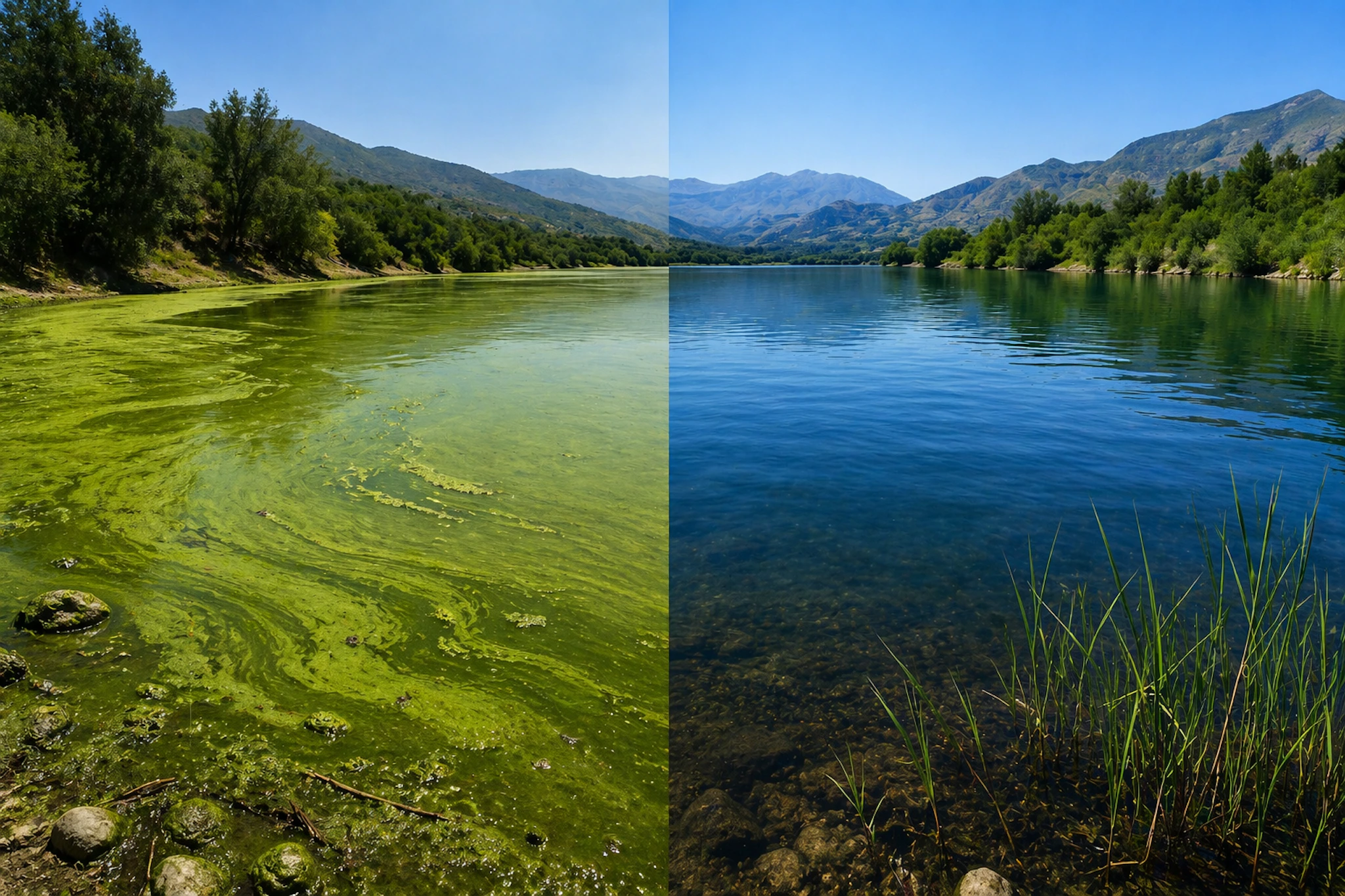
Harmful Algal Blooms are increasingly driven by anthropogenic nutrient loading and warming waters, leading to repeated bloom cycles that degrade ecosystems and generate methane emissions. Traditionally treated as a water-management issue, HABs have been largely overlooked in carbon markets.
This methodology was developed to bridge that gap. It provides a unified framework to quantify climate benefits from HAB mitigation within eutrophic freshwater, brackish and similar eligible coastal systems. Under the Gold Standard Blue Carbon and Freshwater Wetlands scope, it applies conservative baselines, strict safeguards, and deferred crediting to ensure durability and environmental integrity.
By combining short-term intervention with long-term monitoring of sediments and methane fluxes, the methodology ensures that claims of carbon removal and avoidance are real, measurable, and verifiable.
Key Features
- Dual crediting pathways:
Carbon removal (sediment burial) and methane avoidance (annual reductions) - Strong permanence safeguards:
3‑year deferred crediting for removals, sediment core verification, buffer contributions - Robust MRV:
Remote sensing validated with field sampling and third‑party verification - Operational flexibility:
Applicable across project scales and geographies with technology‑neutral design - Conservative accounting:
Downward adjustments, uncertainty quantification, and clear reversal rules - High-impact co‑benefits:
Improved water quality, reduced toxins, biodiversity recovery, and community resilience
Gold Standard welcomes feedback until 22 May 2026.