
Gold Standard

Consultation

Herd Emission Reductions in Dairy (HERD) 

  • Consultation Period 04 Sep 2026 - 04 Oct 2026
  • Submission Deadline Oct 4, 2026 — 16:00 (Europe/Zurich)
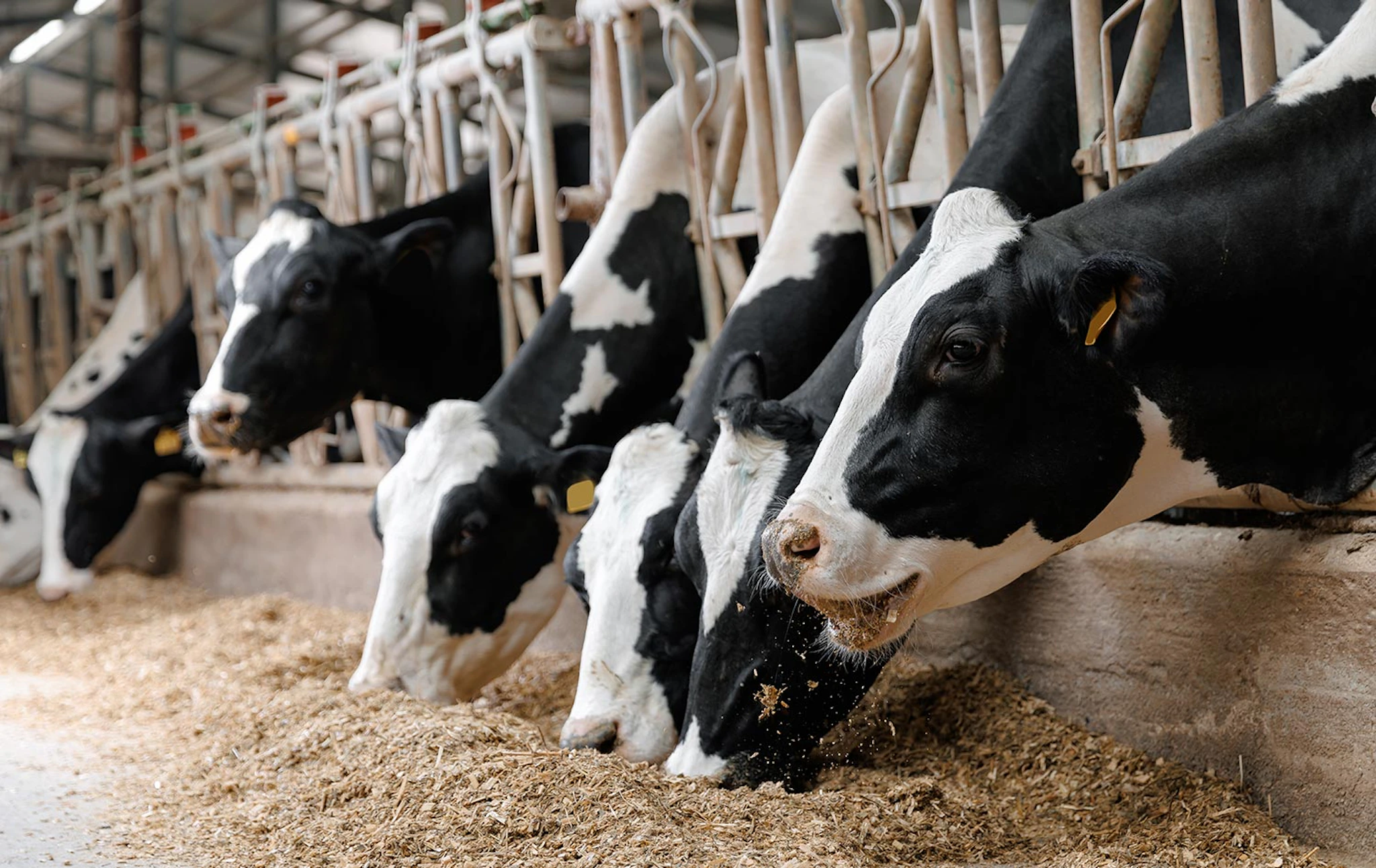
HERD consultation Cover visual

Background

The Herd Emission Reductions in Dairy (HERD) methodology is designed to quantify reductions in greenhouse gas (GHG) emission intensity across smallholder dairy systems operating in data-scarce environments. 

The methodology measures emission reductions per kilogram of Fat- and Protein-corrected Milk (FPCM) from the productive herd. It covers emissions from enteric fermentation, manure management, feed and feed supplementation, and replacement animals. 

HERD combines a standardised baseline approach with a statistically derived regression model, an ambition-adjusted factor, and a conservative business-as-usual comparison. 

Key Features

  • Smallholder Dairy Systems: Applies to smallholder dairy farms with cattle or buffalo. Participants must be defined by the host Party as low-income communities, with the reference area qualifying as a data-scarce environment. Farms maintaining more than 100 dairy animals are not eligible. 
  • Emission Intensity Quantification: Measures emission reductions per kilogram of FPCM rather than absolute emissions from the whole farm. 
  • Standardised Baseline and Regression Model: Uses survey data, primarily milk yield, to establish a standardised baseline for a defined reference area. A regression function predicts farm-level GHG emission intensity using milk yield and relevant herd management variables. 
  • Eligible Mitigation Activities: Covers improved manure management, feed ration quality or composition, and herd management or animal husbandry practices. 
  • Additionality Provisions: Includes a Positive List mechanism providing deemed additionality for qualifying micro and small-scale activities. 
  • Leakage Requirements: Addresses feed displacement, feed-related land use change, equipment and infrastructure, transport, synthetic fertiliser substitution, activity shift or herd expansion, and milk market displacement. 
  • Sampling and Crediting Period: Requires sampling to achieve 90% confidence and 10% precision. The crediting period is five years and may be renewed once, for a maximum of ten years. 

Gold Standard invites feedback from stakeholders

Stakeholders are invited to comment on: 

  1. The scope and applicability conditions 
  2. The methods, including the standardised baseline and regression approach 
  3. Uncertainty, sampling and data requirements 
  4. Additionality provisions 
  5. Leakage treatment 
  6. Monitoring and verification practicality 
  7. The supporting annexes, including default values, the survey and sampling design, the regression validation protocol, and the parameter tables 

Stakeholders are also invited to respond to the following questions: 

  1. (In relation to paragraph 3.2.2.10.c of the draft methodology): Is the three-year pre-activity period, which is defined to be mandatory for collecting milk yield data, feasible on existing activities? What are the barriers, and are there any suggestions for overcoming this, including alternatives? For example – if peer-reviewed literature or official national/regional datasets to establish the reference baselines is suggested, what could be the cap, and deductions to be considered for expected lower precision levels? 
  2. Are the proposed GHG emission sources fully representative of smallholder dairy operations? Should the quantification methodology be expanded to include any other relevant emission sources? 

Document under consultation

  • Herd Emission Reductions in Dairy (HERD)

Submission Process

Please submit your feedback via this form below before 04 October 2026 at 18:00 (CEST).