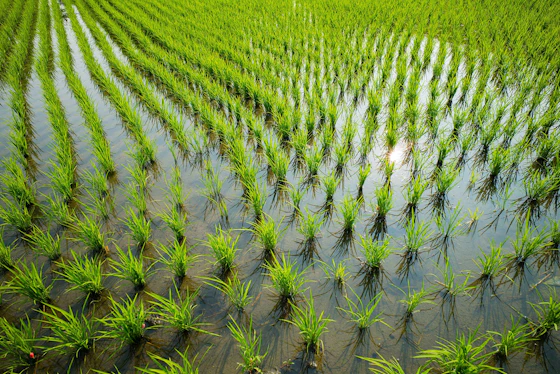
Agriculture is responsible for the greatest share of anthropogenic methane emissions, stemming from rice cultivation, livestock, and manure management.
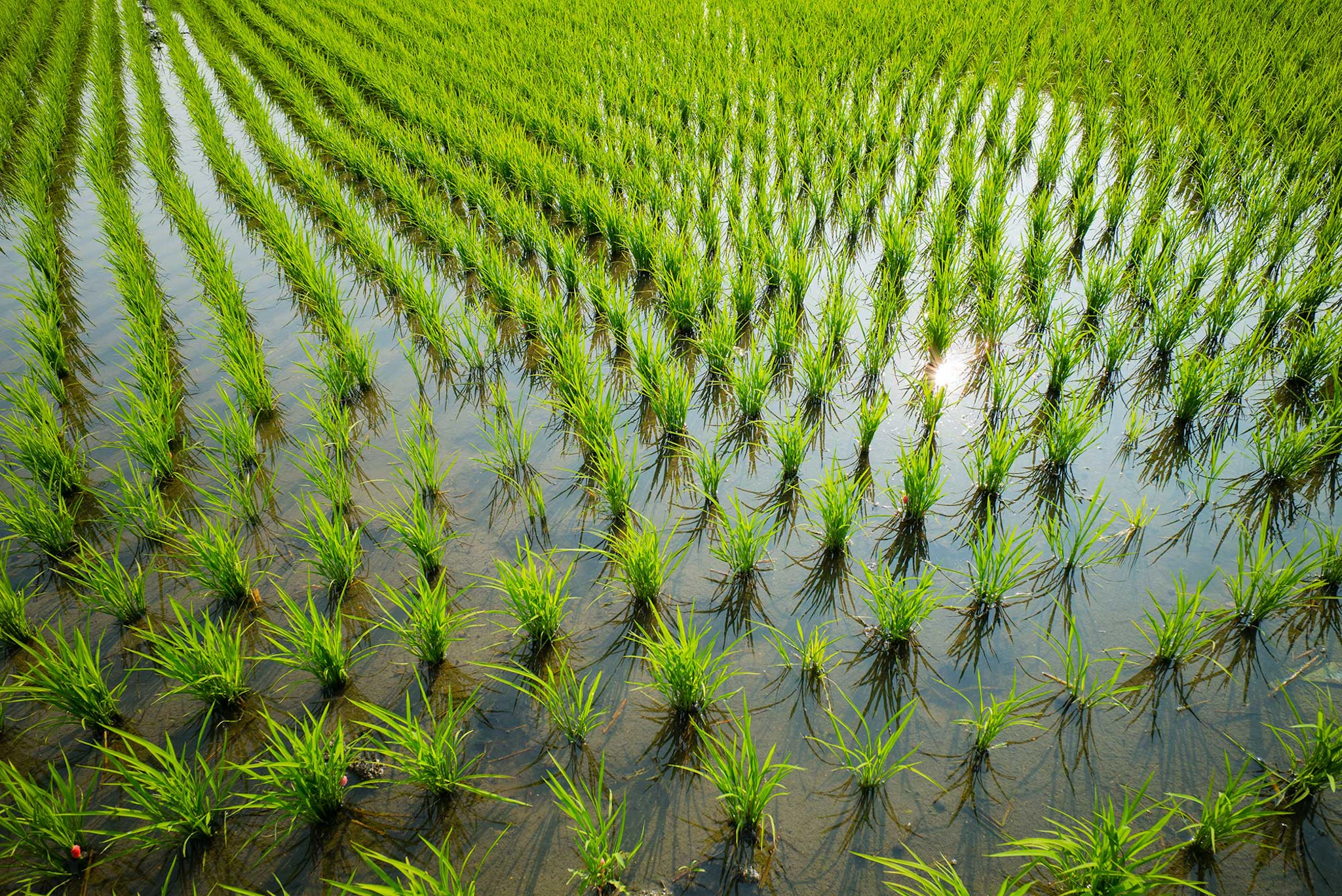
Gold Standard has methodologies available or in development to address each of these key areas, supporting smallholder farmers to adopt sustainable practices that deliver climate impact, food security, and long-term community wellbeing.
Our new Digital Rice Emission Avoidance Methodology (DREAM) represents a significant step forward in how rice methane reductions can be measured, verified and financed. We anticipate the final publication of this important methodology later this year. The following explains what is new and how it works.
Moving beyond AWD: Multiple approaches under DREAM
The earlier Gold Standard rice methane methodology focused essentially on Alternate Wetting and Drying (AWD) alone. DREAM takes a broader view. Its modular structure accommodates a range of interventions, allowing project developers to select configurations that best suit their farming context.
Water management remains central. AWD - periodically allowing fields to dry before re-irrigation - is still a core approach. Drip irrigation offers an alternative, delivering water directly to crop roots and reducing the number of days fields are submerged, cutting both methane emissions and water use.
Other techniques do not involve flooding at all. Methanotrophic bacteria, microorganisms that consume methane, can be introduced to fields to reduce emissions directly. DREAM also allows project developers to employ Soil Organic Carbon (SOC) practices, which increase the carbon stored in soil organic matter, sequestering atmospheric carbon while enhancing soil health and improving water retention.
Careful management of SOC is important: when soil is exposed to the atmosphere beyond certain limits, previously stored carbon dioxide can re-enter the atmosphere. DREAM includes guardrails to ensure that soil organic carbon is conserved within rice fields.
The methodology permits project developers to enhance soil organic carbon and claim the resulting carbon dioxide removals, primarily through the application of biochar. This is done in conjunction with another Gold Standard methodology, the Production and Application for the Removal of Carbon via Biochar (PARC), under which project developers convert organic waste biomass into a stable, charcoal-like substance through pyrolysis, locking carbon into a form that can persist in soil for hundreds to thousands of years.
Finally, switching rice variety can also reduce methane emissions. Rice species vary in stalk thickness and the amount of organic matter required for cultivation. Selecting species that require less straw input can lower methane production without affecting yield, supporting food security.
Accessibility at every scale
One of the central design challenges for any rice methane methodology is balancing scientific rigour with the practical realities of reaching the millions of fragmented smallholder farmers who produce the vast majority of the world's rice. Historical methodologies have struggled to achieve both. DREAM addresses this through a bifurcated verification pathway.
Track 1 is designed to unlock carbon finance for aggregated smallholders. Rather than requiring expensive physical laboratory equipment, it uses open-source satellite-based digital Monitoring, Reporting and Verification (dMRV) alongside conservative IPCC default values to verify field aeration remotely, dramatically lowering transaction costs and making the methodology accessible at scale.
Track 2 provides a more rigorous pathway for larger agricultural estates, requiring direct, site-specific physical measurement through tools such as IoT water sensors and closed static gas flux chambers.
This two-track structure ensures that the credits generated are credible at every scale, without restricting accessibility for smaller operators.
Improving credibility through digital monitoring
DREAM introduces remote sensing-based monitoring for the first time, improving confidence in the data across large, geographically dispersed rice-growing areas. It also introduces a dynamic baseline, adjusting baseline methane emissions based on current weather patterns after the fact, a significant improvement on the earlier methodology, which offered only static defaults or field measurements.
In practice, this means: a pipe system installed in each field to track water levels; remote sensing data to record flooding and drainage days; depth sensors to help farmers determine when re-flooding is needed; and modelling tools that reduce the need for in-field calculations and lab assessments across multiple sites.
Underpinning all of this are programmatic safeguards. A mandatory digital Flowering Lock protects regional crop yields by preventing field drainage during the critical flowering stage. Dynamic weather adjustments guard against over-crediting during natural droughts. Strict labour safeguards ensure that the burden of climate action does not fall unfairly on vulnerable farming communities.
Together, these features reduce the burden on smallholders while improving the quality and credibility of data, without compromising the protections that farmers, buyers and the climate depend on.
Ensuring reductions are genuine and additional
DREAM applies a rigorous, multi-layered additionality framework to ensure that every credit issued reflects a genuine, additional emissions reduction. At its core, the methodology requires projects to demonstrate regulatory surplus: if a country has already mandated practices such as AWD as national policy, projects in those regions will no longer be eligible for credits. Common practice assessment is equally mandatory. If a technique like AWD is already widely adopted in a given area without carbon finance, it cannot be considered additional.
Projects above a certain scale must also undertake an investment analysis to demonstrate that carbon revenue is necessary to make the activity viable. All DREAM projects must additionally apply a default Downward Adjustment Factor (DAF) of 1.25% per year to the baseline, ensuring conservative, credible accounting in line with the broader trajectory toward carbon neutrality. For projects in landlocked countries and Small Island Developing States (SIDS), a positive list provision allows eligible activities to access credits under defined conditions, recognising the particular resource and climate pressures these regions face.
Together, these tools provide strong assurance to investors and buyers that verified reductions from DREAM-certified activities are both real and credible.
A future-proof framework
DREAM offers a more comprehensive framework than its predecessor: more modules, more robust measurement, and full Paris Agreement alignment. These features strengthen the credibility of credits generated under the methodology and reduce the likelihood of significant revisions being needed in the near term, giving developers and buyers a stable standard to build on.
How does DREAM compare to other methodologies?
DREAM is designed to be accessible. AWD is straightforward enough for farmers with no formal education to understand and implement, a significant advantage when working at smallholder scale. Compared to livestock methodologies, which require detailed baseline data such as the individual weight of each animal, AWD is a whole-system intervention covering the entire rice cultivation cycle, with far lower data collection burdens.
Against competing standards, DREAM holds its own. Gold Standard was first to market with a rice methane methodology, and DREAM further differentiates itself through its modular architecture: a clearly structured framework with multiple streams of emission reductions and removals, including biochar and enhanced soil carbon, more comprehensively articulated than equivalent methodologies currently available.
A collective effort, open to ongoing input
DREAM is the product of extensive collaborative development. The consultation process is not a formality; feedback from project developers, VVBs and other stakeholders is actively sought and will be carefully considered in shaping the final methodology. Although submissions to the public consultation for this methodology closed on 22 May, the team remains open to ongoing input from anyone working in or entering the rice carbon market.
DREAM represents a meaningful advance in what is possible for rice methane reduction, expanding access to carbon finance, strengthening environmental integrity, and supporting some of the world's most resource-constrained farmers to take their place at the frontier of climate action. Read the draft methodology We encourage you to read the draft methodology and share your views.