Originally published on Quantum
"Sanitation is more important than independence."
- Mahatma Gandhi (1925)
For the past two decades, Gold Standard has operated at the forefront of the carbon market, proving that high-integrity climate finance can drive real-world impact. From the widespread deployment of clean cookstoves to expanding access to safe drinking water, carbon markets have successfully channelled vital funds to scale life-saving community services.
Yet, despite these strides, one critical element of human health, safety, and dignity has remained largely untouched by climate finance: sanitation.
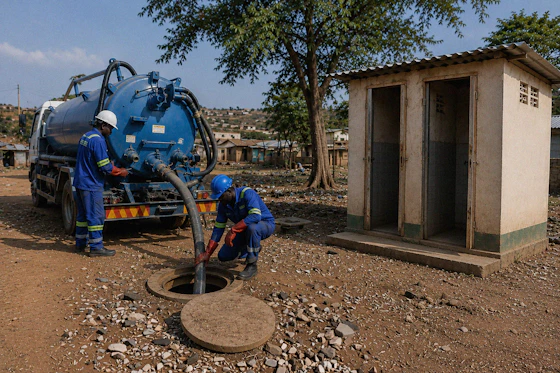
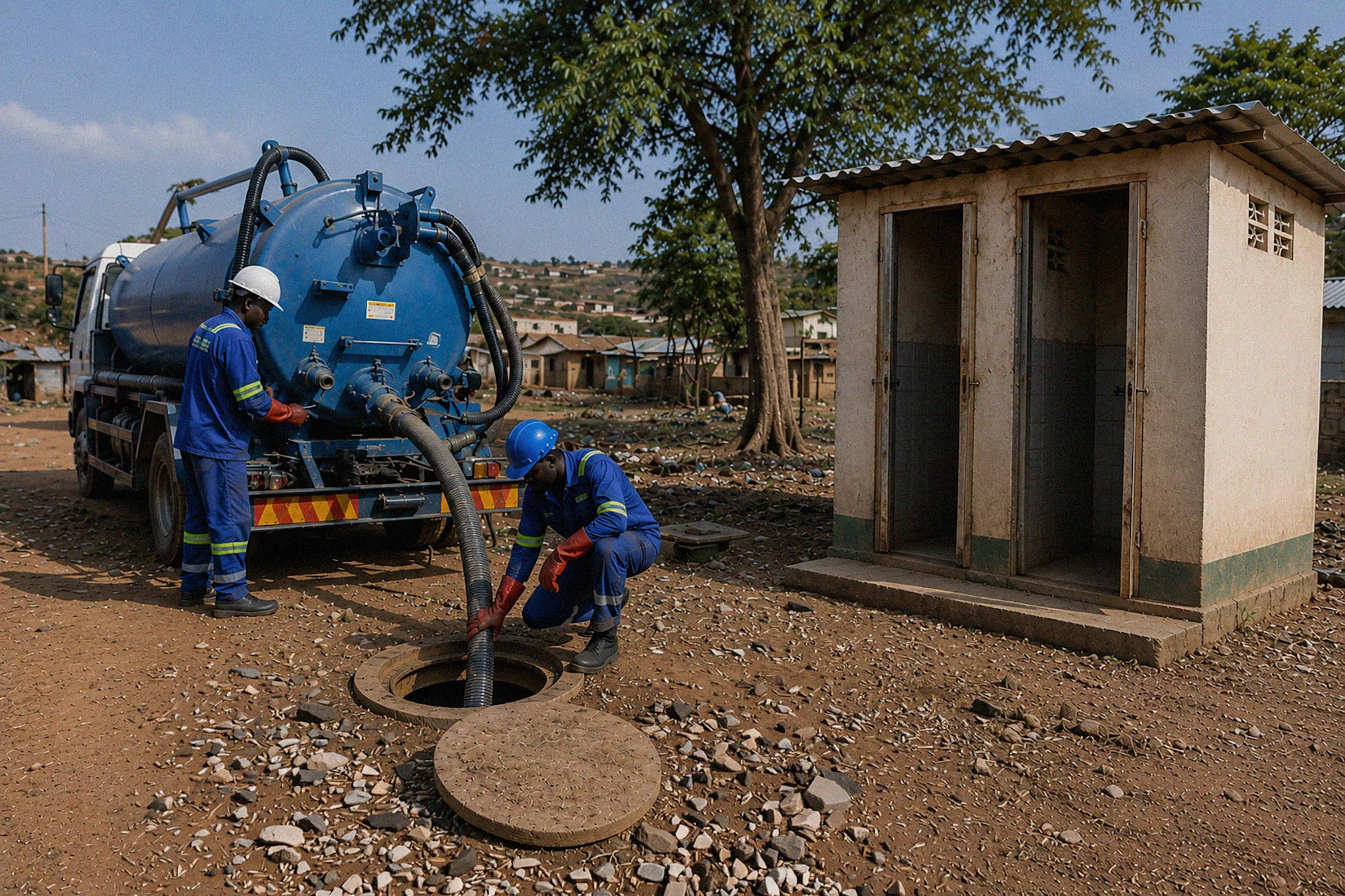
Gold Standard is changing that with the launch of our first-of-its-kind methodology, Safe Sanitation Services (SAS), for public consultation. Designed to bridge the gap between climate action and basic human rights, this new methodology unlocks the carbon market to fund the safe management of human waste, bringing change to a sector that desperately needs development.
Unseen crisis
Progress toward SDG 6 (Clean Water and Sanitation) is badly off track. Roughly 3.5 billion people, nearly half the world, still lack access to safely managed sanitation (WHO & UNICEF, 2023). Unsafe waste management drives cholera, dysentery and typhoid; around 1,000 children under five die daily from related WASH failures (WHO, 2023).
The gap extends to schools, rural clinics and community centres. A lack of safe toilets in clinics raises infection risk for mothers and newborns; a lack of facilities for menstrual hygiene is a leading reason adolescent girls leave school (World Bank, 2022). SAS explicitly covers this broader need, financing infrastructure across households, schools, clinics and small-to-medium enterprises.
The absence of safe facilities is also a gender-safety crisis, with women and girls in marginalised communities often having to wait for darkness to find privacy in fields or bushes, exposing them to harassment and assault.
As former UN Deputy Secretary-General Jan Eliasson puts it: "A toilet is a lifesaver, dignity-protector and women's rights enhancer." (United Nations, 2013).
Bridging the regional divide
The burden falls disproportionately on Least Developed Countries (LDCs), Small Island Developing States (SIDS), and rapidly expanding informal urban settlements, while high-income countries rely on subsidised municipal sewerage.
Nearly 700 million people in LDCs still lack access to even basic sanitation (WHO & UNICEF, 2023), forced to choose between an unsafe toilet or no toilet at all. These communities are paying a steep "poverty premium" - having to spend more out-of-pocket for informal, unsafe waste removal than wealthier populations pay for functional public infrastructure, despite contributing the least to global emissions.
Historically, climate finance has sometimes struggled to reach these high-barrier regions. The SAS methodology addresses the regional imbalance head-on, with rules tailored to micro and small-scale decentralised projects that redirect investment towards LDCs and underserved communities. A hidden super pollutant, poor sanitation is also a climate problem. When waste sits in wet pit latrines, septic tanks or untreated discharge, it decomposes anaerobically, generating methane - a gas roughly 28 times more warming than CO2 over a 100-year period (IPCC, 2021).
Independent estimates put emissions from non-sewered sanitation at around 380 million tonnes of CO2-equivalent annually, with a plausible range of 250-650 million tonnes (Cheng et al., 2022; Lambiasi et al., 2024) - about 4% of human-caused methane, and comparable to CO2 emissions from international aviation (around 545 million tonnes in 2023; IEA, 2024). Aviation has its own dedicated global market mechanism; sanitation has had none. Methane drives roughly 30% of warming since the Industrial Revolution (UNEP & CCAC, 2021; IEA, 2023), making unmanaged sanitation responsible for around 1% of all human-caused warming to date.
This reframes the opportunity represented by the 700 million underserved people in the world’s poorest countries. Open defecation emits little methane because waste decays in the open air; the climate risk lies not in their current footprint but in the technology path ahead of them. Conventional development would route many of them onto wet-pit and unmanaged septic systems, locking in decades of methane emissions. SAS lets them leapfrog that high-methane stage, capturing and treating waste before anaerobic decay occurs.
Our new Safe Sanitation Services methodology provides the scientific framework to quantify the greenhouse gas emission reductions achieved by safely capturing, transporting, and treating this waste. Field measurements of off-site composting suggest that, if adopted across the world’s informal settlements, safe treatment could cut sanitation-sector methane by 13-44% (McNicol et al., 2020; see also Stanford University, 2020).
Applying "suppressed demand" to sanitation
Suppressed demand is an established concept in other carbon-market sectors, such as clean cooking and water, but its application to sanitation is new. Traditional baseline accounting requires measuring existing high emissions to prove a reduction - a paradox in WASH, since open defecation itself generates very little methane. Strict historical baselines have effectively penalised extreme poverty, excluding the most vulnerable populations from carbon finance.
That is incompatible with global net zero, which cannot be reached without universal access to essential energy and sanitation, nor by routing developing communities through the same high-emission systems net zero must ultimately replace (IEA, 2021). SAS resolves this with a counter-factual baseline: rather than measuring current, artificially low emissions, it calculates what emissions would have occurred had these populations received basic, hygienic facilities in the first place. This removes extreme poverty as a barrier to carbon finance.
Transforming the WASH sector beyond climate change
Cookstove and water methodologies have already shown how carbon finance can drive sector-wide innovation and attract private capital. Sanitation projects in low-income areas frequently collapse because user tariffs rarely cover the cost of extracting, transporting, and treating faecal sludge. Carbon finance can fill that gap as a results-based mechanism, mandating that revenue is shared equitably to subsidise the poorest households, formalise employment for stigmatised sanitation workers, and protect vulnerable populations.
The methodology is also built for Paris Agreement alignment, with dynamic baselines tied to host countries’ net zero trajectories and Nationally Determined Contributions (NDCs), ensuring carbon finance supports, rather than substitutes for, national infrastructure development.
High-quality carbon markets have proven they can do more than cut emissions. With this methodology, they can also advance gender equity, address public health crises in homes and schools, cut a major super pollutant, and restore dignity to millions.
References
- Gandhi, M. K. (1925, May 24). Navajivan. As cited in The collected works of Mahatma Gandhi (Vol. 31). Publications Division, Ministry of Information and Broadcasting, Government of India.
- Intergovernmental Panel on Climate Change. (2021). Climate change 2021: The physical science basis. Contribution of Working Group I to the Sixth Assessment Report of the Intergovernmental Panel on Climate Change. Cambridge University Press. https://www.ipcc.ch/report/ar6/wg1/
- United Nations. (2013, November 19). A toilet is a lifesaver, dignity-protector and women's rights enhancer, says Deputy Secretary-General on World Toilet Day [Press release]. https://press.un.org/en/2013/dsgsm724.doc.htm
- World Bank. (2022, May 12). Menstrual health and hygiene. World Bank. https://www.worldbank.org/en/topic/water/brief/menstrual-health-and-hygiene
- World Health Organization. (2023). Burden of disease attributable to unsafe drinking-water, sanitation and hygiene: 2019 update. World Health Organization. https://www.who.int/publications/i/item/9789240075610
- World Health Organization & United Nations Children's Fund. (2023). Progress on household drinking water, sanitation and hygiene 2000-2022: Special focus on gender. UNICEF. https://washdata.org/
- McNicol, G., Jeliazovski, J., François, J. J., Kramer, S., & Ryals, R. (2020). Climate change mitigation potential in sanitation via off-site composting of human waste. Nature Climate Change, 10(6), 545–549. https://doi.org/10.1038/s41558-020-0782-4
- Cheng, S., Long, J., Evans, B., Zhan, Z., Li, T., Chen, C., Mang, H.-P., & Li, Z. (2022). Non-negligible greenhouse gas emissions from non-sewered sanitation systems: A meta-analysis. Environmental Research, 212(Part D), Article 113468. https://doi.org/10.1016/j.envres.2022.113468
- Dickin, S., Bayoumi, M., Giné, R., Andersson, K., & Jiménez, A. (2020). Sustainable sanitation and gaps in global climate policy and financing. npj Clean Water, 3, Article 24. https://doi.org/10.1038/s41545-020-0072-8
- International Energy Agency. (2023). Global methane tracker 2023. https://www.iea.org/reports/global-methane-tracker-2023
- International Energy Agency. (2024). Aviation. Retrieved June 8, 2026, from https://www.iea.org/energy-system/transport/aviation
- International Energy Agency. (2021). Net zero by 2050: A roadmap for the global energy sector. https://www.iea.org/reports/net-zero-by-2050
- Stanford University. (2020). Human waste treatment helps solve climate change puzzle. Stanford Doerr School of Sustainability. https://sustainability.stanford.edu/news/human-waste-treatment-helps-solve-climate-change-puzzle
A note on the numbers. These figures are estimates, and we've tried to be transparent about their uncertainty. The central value — around 380 million tonnes of CO₂-equivalent a year from non-sewered sanitation — is the published estimate of Cheng et al. (2022), whose own range spans roughly 22 to 1,003 million tonnes. We independently cross-checked it: a first-principles calculation using the IPCC 2019 method reproduces it to within a few percent, and independent reviews (e.g. Lambiasi et al., 2024) and earlier IPCC guidance place sanitation-sector methane in the same range. This represents roughly 4% of human-caused methane; the exact share depends on the assumed global methane total, which is why we give a round figure. All values use a 100-year global-warming-potential basis (GWP₁₀₀ = 28, the methodology's value, close to the IPCC AR6 range of 27–30), chosen so the comparison with aviation is like-for-like. Crucially, these figures describe the scale of the problem — the gross methane from poorly managed sanitation — not the reductions this methodology would credit, which are smaller once conservative baselines and adjustment factors are applied.