
Originally published on Carbon Pulse 22 April 2026
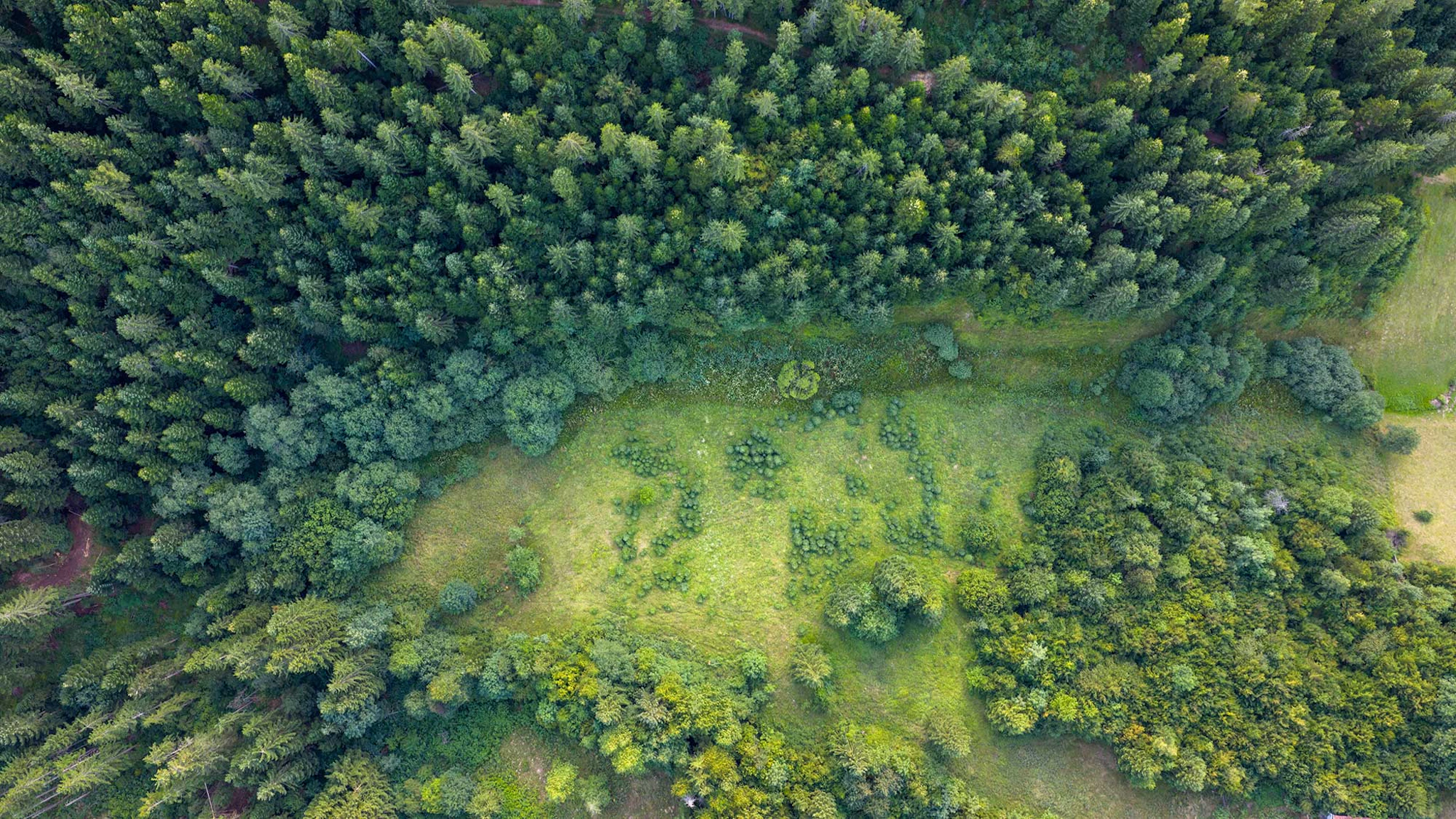
On Earth Day 2026, debate around forestry projects continues to rely on a flawed assumption: that all afforestation, reforestation and revegetation (ARR) projects are fundamentally the same, and that without a single specific type of control plot or dynamic baseline, their measurement cannot be credible. In practice, this assumption ignores the enormous diversity of real-world projects.
For instance, a one-million-hectare contiguous restoration programme in the Amazon bears little resemblance to an agroforestry system introduced by thousands of individual smallholder farmers in India. Yet existing methodologies attempt to measure them in exactly the same way.
The result is a growing “integrity paradox.” Complex monitoring frameworks, originally designed for large, well-funded projects are applied universally, making participation prohibitively expensive for smaller developers and community projects, particularly in the Global South.
Gold Standard’s new Sustainable Transformation through Afforestation, Reforestation and Revegetation (STARR) methodology is designed to resolve this paradox. It introduces a flexible framework that preserves high scientific integrity while ensuring carbon finance is accessible to both large and small projects.
A context-based approach to integrity
Applying identical monitoring requirements to fundamentally different projects does not strengthen integrity; it simply excludes many of the communities best positioned to restore degraded landscapes. A central objective of STARR is to improve access to carbon markets for the projects that need finance most.
STARR therefore introduces three methodological tracks aligned with project scale to provide a clear, standardised structure that can adapt to the diverse realities of land-use projects. Projects can transition to higher-rigour tracks when market demand justifies additional complexity.
- Track 1: Applies to large-scale commercial projects. It requires spatially matched dynamic baseline using control areas and baseline updates with real environmental change.
- Track 2: Medium-sized projects employ a regionally appropriate baseline, which adjusts over time but is simplified compared to Track 1.
- Track 3: Optional approach for revegetation and smallholder contexts, where census or statistical sampling is allowed for measurement.
The three-track approach evolves the forestry methodology from a "one-size-fits-all" model to a more precise system that clearly distinguishes between high-volume industrial timber and high-impact native woodland and agroforestry activities. By separating core activities from scale-based sub-modules, STARR offers project developers the flexibility to choose monitoring tracks that balance rigorous carbon certainty with the practical realities of smallholder and restoration costs.
Swapan Mehra, Founder & CEO of environmental advisory firm Iora Ecological Solution, who advised on the methodology, explains: "By differentiating between smallholder agroforestry and large-scale ecosystem restoration, STARR addresses the operational difficulty and entry barriers that have historically sidelined smaller developers, ensuring that high-quality carbon finance reaches those who need it most."
This structure simplifies complex technical requirements into a logical menu, ensuring the intent remains clear while maintaining the high environmental integrity required by global carbon markets. It also improves the usability and clarity of the framework, making it more accessible to both project developers and Validation and Verification Bodies (VVBs).
Modernising monitoring approaches
Many existing methodologies in ARR and other project areas depend heavily on expensive field-based measurements and rigid baseline models. While effective for large commercial projects, these approaches are often impractical in fragmented landscapes. In many regions, land ownership may be divided among thousands of farmers, and projects may introduce multiple species to strengthen biodiversity, further complicating conventional monitoring systems.
To overcome this, STARR enables smallholder projects to apply conservative static historical baselines, such as trend projections or zero baselines. This approach makes high-integrity projects operationally viable for a wider range of developers across more regions.
At the same time, the methodology shifts away from labour-intensive field measurement toward a hybrid system that combines advanced remote sensing with targeted ground-truth sampling. This maintains scientific rigour while significantly reducing operational costs, expanding access to carbon finance, particularly for projects in the Global South.
Alongside these new approaches, STARR introduces dynamic baselines that adjust to real-world conditions as a standard track. Rather than assuming static land-use trends, baselines evolve alongside regional land-use change and natural regeneration patterns. If surrounding forest areas regenerate naturally or regional land-use policies change, the project baseline adjusts accordingly, helping ensure that every credit issued continues to represent genuine, additional carbon removal for every project type.
Focusing on meaningful accuracy
A central challenge for ARR projects - and carbon markets more broadly - is balancing precision with practicality. Highly complex measurement systems may theoretically increase accuracy, but they often impose costly requirements that deliver limited additional certainty while diverting resources from project implementation or community benefits.
As Mehra notes: "Investors in smallholder systems need to be encouraged, and we need to finance them to just grow trees. Why are we starting with suspicion? We should start with trust and then eliminate for suspicion."
STARR focuses on improving meaningful accuracy rather than theoretical precision that does not fit the landscape. Advances in remote sensing now allow projects to monitor forest growth at increasingly high resolution, sometimes even identifying individual trees. When combined with targeted ground-truth data, these technologies provide a robust and scalable method for verifying carbon outcomes at the individual farm level while keeping monitoring costs manageable.
By integrating digital monitoring with strategic field validation, STARR creates a scalable model for high-integrity forest monitoring.
New technology is enabling greater levels of trust in the market. Other upcoming Gold Standard methodologies, such as the updated reduction of methane emissions from rice cultivation and the new biochar methodology, would also follow the same principle: expanding accessibility without compromising integrity.
Readiness for the next phase of carbon markets
The methodology is designed to align with evolving expectations across both voluntary and compliance markets, including the framework of the Paris Agreement and emerging integrity initiatives. For example, the methodology is built to meet Integrity Council for the Voluntary Carbon Market (ICVCM), ratings agency, and compliance inclusion requirements. By aligning these high-level benchmarks, it offers a methodology that is essentially "pre-vetted" for institutional and regulatory acceptance.
Dynamic baselines and strengthened monitoring approaches help ensure that the credits generated remain credible under increasing scrutiny from buyers, regulators and ratings agencies and offer a more accurate and pragmatic framework. The incorporation of a more sophisticated understanding of reversal risk and monitoring approaches that have evolved in recent years has made the credits generated under this methodology more resilient to long-term scrutiny.
Expanded eligibility
The methodology also expands the scope of activities included within ARR approaches, covering a broader range of agricultural and revegetation interventions in addition to classical afforestation and reforestation activities. For instance, projects can apply all silvicultural systems, including conservation forests with no timber use, forests with selective harvesting, and rotation forestry. Likewise, all projects can include agroforestry and silvopasture (integrating trees, pasture, and livestock into a single, managed system).
The enhanced features and expanded scope enable projects to deliver not only carbon removal but also wider environmental and social benefits, including improved soil health, erosion prevention and strengthened rural livelihoods.
Building a more inclusive carbon market
The goal of STARR and other Gold Standard land-use methodologies is straightforward: to create a system that is both high-integrity and practically workable. It will soon be open for public consultation and stakeholder feedback, a critical step that will help us refine a methodology that is both high on environmental integrity and remains grounded in practical, real-world implementation.
If carbon markets are to scale to the level required to meet global climate goals, they must support the full diversity of restoration and climate-smart agricultural efforts, from large landscape programmes to smallholder agroforestry systems.
Forest science is constantly evolving, and methodologies must adapt to reflect this. By balancing the best available scientific integrity with accessibility, STARR aims to unlock climate finance for the communities and landscapes where restoration can deliver the greatest impact.