Gold Standard

Ongoing Emissions Responsibilities (OER)

The gap between climate ambition and credible action is a familiar challenge for any business with net-zero targets. Even the most ambitious organisation will continue to emit greenhouse gases as it decarbonises. Tackling Scope 1, 2, and 3 emissions takes time, and in the interim, those emissions continue to contribute to climate change. 

Businesses are being encouraged to take responsibility for the emissions that remain unabated annually as they transition to net zero. This concept is called Ongoing Emissions Responsibility (OER), and it has been recognised by the Science Based Targets initiative (SBTi).
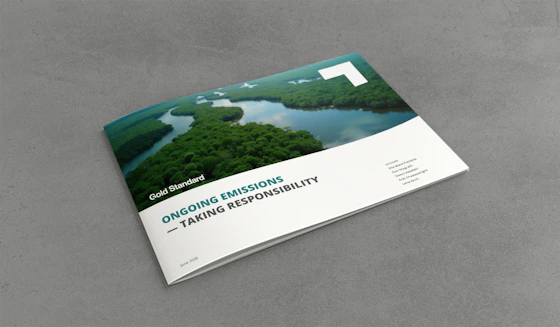
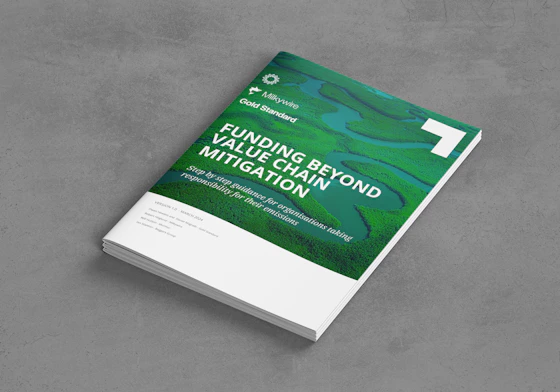
Express your interest in OER Work Stream

OER WORKSTREAM

What is OER?  

OER provides a framework for taking responsibility for the emissions that will continue to be emitted by an organisation on its journey to net zero. Gold Standard suggests investments within an OER strategy can broadly fall into three categories: 

  • Unlocking near-term decarbonisation through capacity building, policy engagement, and sector collaboration 
  • Laying the groundwork for long-term net zero through research and development (R&D) and infrastructure investment 
  • Contributing to global mitigation now by directing finance towards high-impact projects that deliver certified emissions reductions, or high quality paris aligned carbon credits

The right balance of investments depends on what your organisation wants to achieve. Watch the video to learn how this simple three-step process - Scope, Actions and Mechanisms - can help you identify the right investments to achieve your OER goals.

Many actions that count towards OER are already part of companies’ sustainability strategies.

OER enables organisations to demonstrate credible climate responsibility while advancing their own decarbonisation through investments in capacity building, innovation, enabling activities and global mitigation efforts.

Watch the video to learn more about the challenges and opportunities OER presents for corporates.

The role of non-mitigation OER 

As expectations around corporate climate action continue to evolve, OER provides a pragmatic bridge from ambition to action. By investing in non-mitigation OER, companies can channel finance towards critical investment types that help to accelerate decarbonisation journeys, maintain credibility during the transition and strengthen their climate strategies. These investments have the potential to unlock barriers to decarbonisation, scale essential climate solutions, and enable system transformation.

SBTi’s Corporate Net Zero Standard 2.0 includes a multi-tiered recognition framework for OER, enshrining these efforts into a recognisable label that can translate these investments to consumers, investors and society. 

Where do credits fit into an OER strategy?

Carbon credits are the primary mechanism for contributing to global mitigation. How prominent a role credits play within an OER strategy depends largely on the context of the organisation. Once emissions have been calculated and an internal carbon fee has been set, organisations can determine how to allocate resources across different forms of climate action within their OER strategy, including carbon credits, direct mitigation activities, R&D and other contributions to global decarbonisation.  

While activities such as R&D, policy engagement, and capacity building are enablers of long-term decarbonisation, carbon credits represent immediate, verified impact in the real world. 

The balance between the two should be guided by an organisation's goals and circumstances. They are not in competition; they are different ingredients of a credible corporate climate strategy: each valuable individually, but more powerful together. 

Start your OER strategy now   

Many companies are already applying the principles of OER without realising it. Businesses that are investing in high-integrity carbon credits or funding climate advocacy efforts are already following a form of OER. Framing this within an OER strategy now helps claim this credibly as a contribution to climate action within the bounds of the SBTi Net Zero Standard. 

Read here to get started in five simple steps.

How we moved from Beyond Value Chain Mitigation (BVCM) to OER

OER is not a new concept, but rather an evolution informed by years of research, guidance, and practical experience in this area.

Until recently, this approach was referred to as Beyond Value Chain Mitigation (BVCM). The shift away from the term BVCM reflects a broadening understanding of the range of activities that contribute to global climate goals.

While mitigation efforts remain critical, the updated terminology better recognises the importance of complementary investments, such as R&D, capacity building, and policy advocacy, alongside mitigation activities such as carbon credits. Together, these efforts help accelerate progress towards global climate objectives.


Overview

Gold Standard-produced guidance for BVCM is still applicable to an OER approach. You can learn more from this one-page overview.

Murmur logo
Milkywire Logo
Next High-Integrity Carbon Credits