



Gold Standard

Consultation

Grid-Connected Renewables, Storage and Energy Transition (G-RESET)

  • Consultation Period 22 Jul 2026 - 21 Aug 2026
  • Submission Deadline Aug 21, 2026 — 16:00 (Europe/Zurich)
  • Scope Activity Climate ActionAffordable and Clean Energy
Grid-connected Renewable Generation

Background

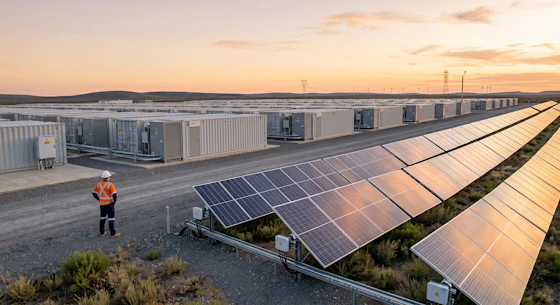
Grid-Connected Renewables, Storage and Energy Transition (G-RESET) is a Paris Agreement Aligned (PAA) methodology for grid-connected renewable generation, energy storage and the technologies of the energy transition. It forms part of the modernisation of Gold Standard's energy framework for the Paris era, developed alongside the Energy Systems and Efficiency Activity Requirement (AR 202) and the accompanying reform of eligibility for grid-connected renewable energy.  

The methodology establishes a rigorous framework for quantifying greenhouse gas (GHG) emission reductions from renewable generation, storage arbitrage, and captive and aggregated configurations. It sets conservative baselines below business-as-usual, applies a downward adjustment for ambition, accounts for the full life-cycle footprint of the infrastructure, and requires revenue-grade digital measurement, reporting and verification — so that credited reductions are real, additional, and consistent with the host Party's nationally determined contribution (NDC) and long-term low-emission development pathway.  
Key Features: 

  • Modular Architecture: The methodology applies to activities deploying one, or a combination, of five modules — Greenfield Generation, Brownfield and Asset Optimisation, Energy Storage and Time-shifting, Captive Generation, and Virtual Power Plants — applied independently, stacked as an integrated solution, or added mid-crediting period as a phased expansion.  
  • Paris Agreement Alignment: To ensure credited reductions remain below business-as-usual over time, the methodology requires conservative baseline setting, a downward adjustment factor for ambition, a below-business-as-usual crediting baseline, and reassessment of additionality at each crediting-period renewal. The uncredited difference between business-as-usual and the crediting baseline accrues to the host Party's NDC.  
  • Storage and Temporal Integrity: Storage is credited on the basis of the emissions it verifiably displaces, through a tiered temporal-accounting framework that matches grid emission factors to the time of charging and discharging. Dispatch that increases system emissions over the monitoring period earns no reductions.  
  • Life-Cycle Integrity: Embodied (life-cycle) emissions of material-intensive hardware are quantified, deducted, and recovered in full within the crediting period; End-of-Life decommissioning plans are required for utility-scale assets, addressing the full life cycle of the infrastructure.  
  • Digital Measurement, Reporting and Verification: Generation, charging, discharging and captive consumption are measured with revenue-grade digital metering and automated telemetry, with proportionate provisions for aggregated distributed resources.  

Gold Standard invites feedback from stakeholders

Gold Standard welcomes feedback on all aspects of the methodology. Stakeholders are particularly invited to respond to the following questions. Please provide reasoning and supporting evidence where possible.

  1. Emergency-Backup Running Limit: Fossil-fuelled emergency backup is limited to 100 operating hours per year, in addition to the 5% annual fossil-yield cap, with an exception for periods of officially declared disaster or system outage. Stakeholders are invited to comment on whether 100 hours per year is appropriate, and to provide evidence for an alternative limit.
  2. Brownfield Declining-Baseline Uplift: The Module 2 declining-baseline conservative uplift (u) is set at 0.06, applied uniformly to the representative-year baseline in place of a historical standard deviation. Stakeholders are invited to comment on whether 0.06 is appropriately conservative, and to provide evidence for an alternative value.
  3. Sub-Revenue-Grade Metering Discount: The Aggregation Reconciliation Waiver applies a standardised 3% conservative discount to the aggregated result where telemetry is below revenue grade. Inverter and platform telemetry are not necessarily rated to an IEC 62053 revenue-meter accuracy class. Stakeholders are invited to comment on the appropriate conservative discount for sub-revenue-grade aggregated telemetry, and on the evidence base for calibrating it.
  4. Tier-1 Temporal-Accounting Discount: Where hourly marginal grid-emission data are unavailable, the methodology permits a Tier-1 proxy, the operating margin mapped to standardised load blocks, subject to a conservativeness discount. Stakeholders are invited to comment on the appropriate value and basis for the Tier-1 conservativeness discount, and on the conditions under which the Tier-1 proxy should be permitted in place of hourly marginal data.
  5. Would-Be-Curtailment Evidentiary Standard: Where a storage asset verifiably charges from co-located generation that would otherwise have been curtailed, the charging emission factor may be set to zero. For grids without granular dispatch data, eligibility rests on a physical would-be-curtailment standard. Stakeholders are invited to comment on the evidentiary requirements for demonstrating would-be curtailment, in particular the physical standard proposed for data-scarce grids, and on whether these adequately prevent over-crediting.
  6. Micro-Scale Positive List: Activities of micro scale (≤ 10,000 tCO₂e per year) may qualify for a micro-scale Positive List, under which they are deemed financially additional without an investment analysis. Stakeholders are invited to comment on the technologies and configurations that should appear on the micro-scale Positive List, and on whether the ≤ 10,000 tCO₂e per year eligibility limit is appropriate.

Documents under consultation

  • Grid-connected Renewables, Storage, & Energy Transition (G-RESET)
  • VVR for methodology update ​PAA Validation and Verification Requirements - Methodologies Update (GRESET)

Submission Process

Please submit your feedback via the form below before 21 August 2026 at 18:00 (CEST).