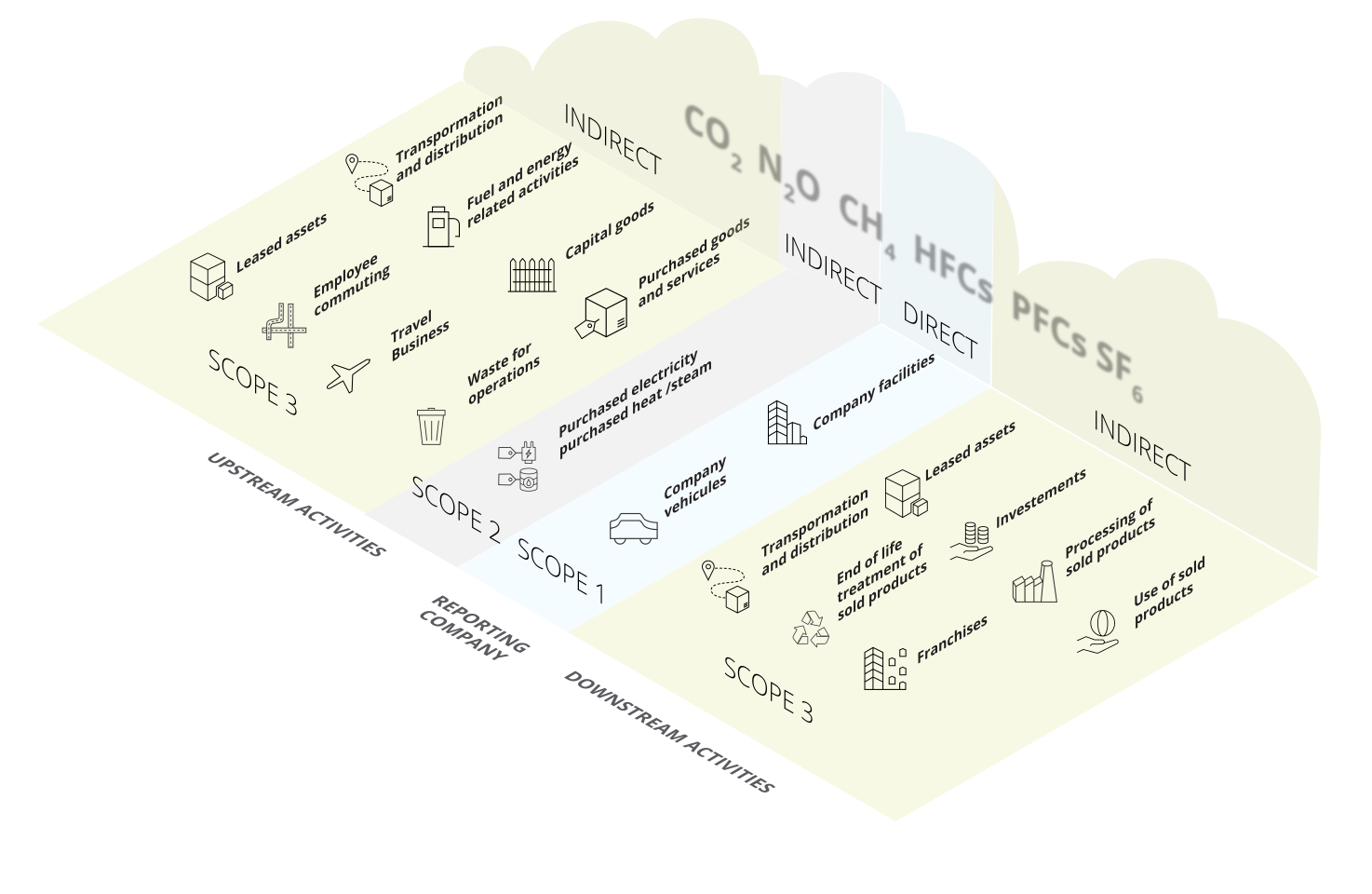
Abating emissions across your operations and throughout your value chain is the foundation of credible climate action and should be every organisation’s primary climate focus.
The Greenhouse Gas Protocol categorises emissions into Scope 1, 2 and 3, depending on where they emanate from. Understanding your emissions is an essential first step. It enables you to identify reduction opportunities, set credible targets, and develop an effective path to net zero.
Gold Standard has the experience and expertise to support organisations on this journey. Our standards, tools and guidance can help you measure and manage your emissions, identify meaningful reductions, and invest in high-integrity climate action where direct reductions are not yet possible.
Organisations should also take responsibility for emissions that remain unabated on the journey to net zero. This complements, but does not replace, continued efforts to reduce emissions.
Scope 1, 2 and 3 Emissions
Scope 1 emissions are direct greenhouse gas emissions from sources that an organisation owns and controls. These may include emissions from fuel combustion in company-owned buildings, vehicles and equipment, industrial processes, and the leakage of refrigerants or other gases.
The sources of Scope 1 emissions vary widely between sectors. Organisations should identify and measure these emissions as part of a comprehensive greenhouse gas inventory, then prioritise opportunities to reduce them through changes to technologies, operations and business practices.
Scope 2 emissions are indirect greenhouse gas emissions from the generation of purchased or acquired energy, including electricity, steam, heat and cooling. The emissions are produced at facilities owned or controlled by another organisation, but result from the energy an organisation purchases and uses.
Scope 2 emissions can be more complex to trace and influence than direct operational emissions. Organisations can reduce them by improving energy efficiency, reducing energy demand and switching to lower-emission or renewable energy sources, while applying appropriate accounting and reporting methods.
Scope 3 emissions, though significant, are not directly produced by the company itself. A company is indirectly responsible for these emissions through upstream and downstream activities within its value chain. This includes greenhouse gases (GHGs) produced by direct and indirect suppliers, vendors, customers, and any other intermediaries. Read Opinion How Do You Solve a Problem Like Scope 3?